
Caviar is one of the world’s most refined delicacies — but it doesn’t need to feel complicated.
If you’re exploring it for the first time, this guide covers everything you need to know — from what caviar is to how to choose the right one with confidence.
What Is Caviar? |
Caviar is salt-cured roe from sturgeon, prized for its rarity, texture, and balance. While many fish produce roe, only sturgeon roe is considered true caviar — a distinction that defines its quality and heritage. For centuries, caviar has been associated with luxury, originating from the Caspian Sea region, where Persian and Russian cultures first elevated it as a delicacy reserved for royalty and special occasions. Today, it remains a symbol of refinement — not because it is complicated, but because it is carefully produced. |
Why Is Caviar So Expensive? |
Caviar takes time. True caviar comes from sturgeon, a species known for its slow maturation and carefully cultivated roe. Sturgeon can take years — sometimes decades — to mature before producing roe. Harvesting is delicate, and curing requires precision to preserve both flavor and texture. It’s not mass-produced. Every step is intentional, which is what makes it exceptional. |
What Does Caviar Taste Like? |
Caviar is often misunderstood. Rather than being overly fishy, high-quality caviar is defined by balance — a smooth, buttery richness followed by a clean, lightly briny finish. Each pearl releases flavor gently, creating something refined rather than overpowering. |
Types of Caviar (Where to Start)
Understanding the main types of caviar makes choosing your first one far simpler.

Ossetra CaviarBalanced, nutty, and refined. Ideal for first-time buyers. |

Kaluga CaviarRich, buttery, and indulgent. Best for special occasions. |

Paddlefish CaviarLight and accessible. A more subtle entry point. Best suited as a premium garnish. |
Quick Decision Guide
|
First time |
Impressing someone |
Exploring/Garnish |
How to Eat Caviar |
Caviar is best enjoyed simply. Serve it chilled, use a non-metal spoon, and take small amounts at a time. Let it rest briefly on your palate before tasting. |
What to Eat with Caviar |
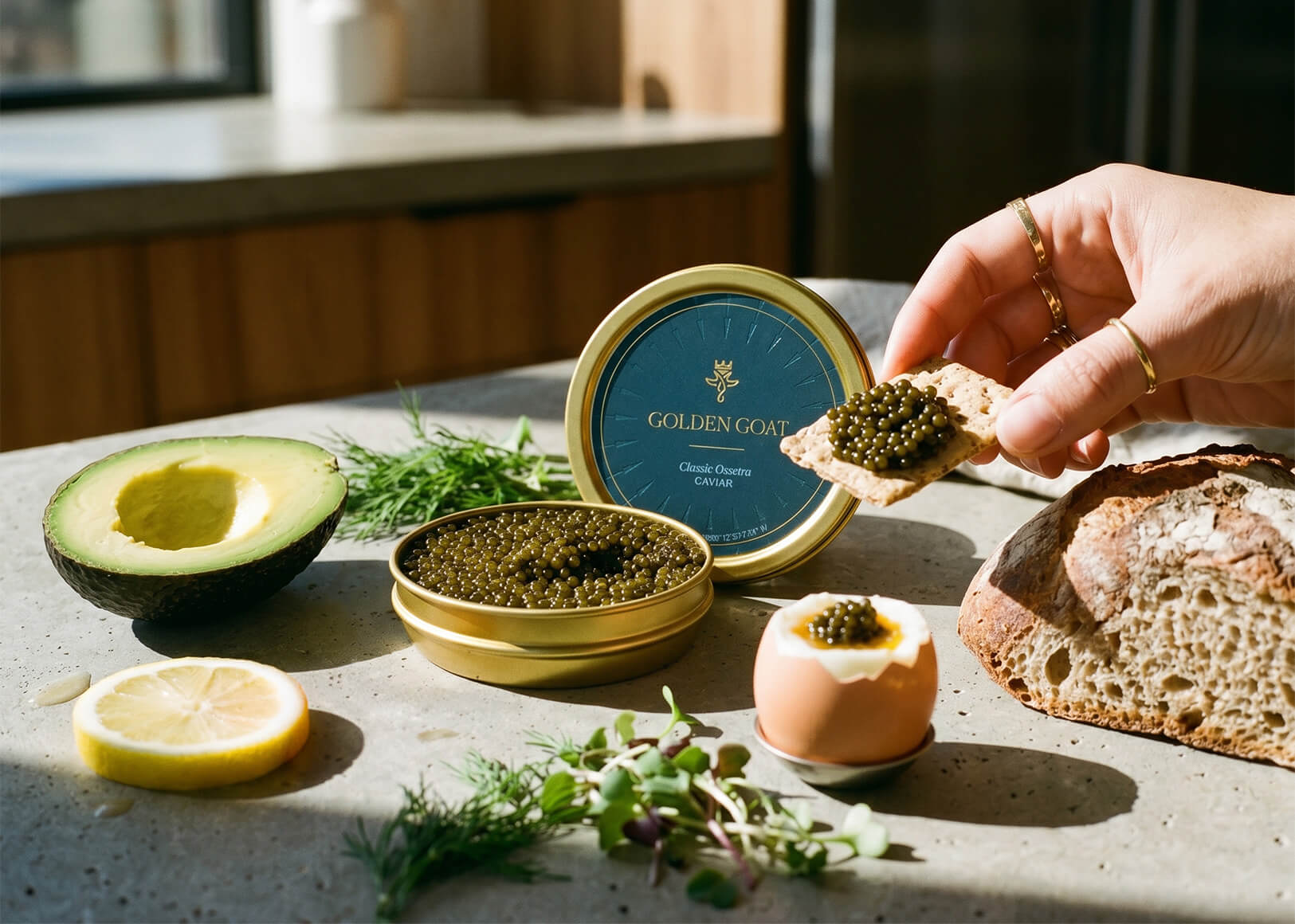
The best pairings are understated. Champagne, vodka, blinis, or a crisp potato chip — all designed to complement, not compete. |
How Much Caviar Should You Buy?
For a first experience:
|
30g |
50g–125g |
125g+ |
Starting small is always the right choice.
How to Recognize High-Quality Caviar
Not all caviar is created equal. Once you know what to look for, the difference becomes clear.
A simple way to assess quality is through the Three T’s: Taste, Texture, and Tone.
| Taste Clean, balanced, never bitter |
Texture Firm pearls with a gentle pop |
Tone Natural color with a soft sheen |
When all three are in balance, you’re experiencing caviar at its best.
Choosing Your First Caviar |
If you’re unsure where to start, keep it simple. For most people, Ossetra offers the most balanced and approachable introduction — a clear expression of what caviar should be. |
Ready to Try Caviar for the First Time? |
Understanding caviar is one thing — choosing the right one is what defines the experience. If you’re ready to take the next step, we’ve simplified it. |
Frequently Asked Questions About Caviar
Is caviar raw?Caviar is lightly cured, not cooked. |
Does caviar taste fishy?No — high-quality caviar is clean and balanced. |
What is the best caviar for beginners?Ossetra is widely considered the best starting point. |